
Eating disorders and sport

There are numerous links between eating disorders and sport
It is well known that certain sports in which weight limits must be adhered to are associated with an increased risk of developing eating disorders. However, certain sports also promote the development of body image disorders, which are a key characteristic of eating disorders (even though sport in general has a positive effect on body image and body awareness). Specific forms of these body image disorders can include body dysmorphic disorders, for example when a person's own body is considered to be disfigured because it is not muscular enough. In the following, these relationships between the practice of sports (especially certain sports) and the development of mental disorders, especially eating disorders, will be examined in more detail. As a professor and head of psychology at the University of Düsseldorf, this topic is particularly close to my heart.
Body weight and eating disorders in athletes
There are three types of eating disorders in athletes:
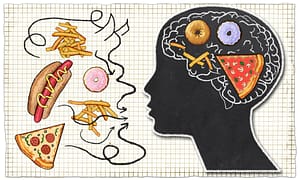
- Anorexia nervosa
- Bulimia nervosa, binge eating disorder
- Binge eating disorder, which also involves binge eating but does not lead to vomiting or other measures to counteract weight gain, as is the case with bulimia nervosa.
Effects of these eating disorders in athletes:
Anorexia nervosa is associated with underweight, bulimia nervosa is generally associated with normal weight, and binge eating disorder is usually associated with overweight. Anorexia nervosa and bulimia nervosa in particular play an important role in connection with sports because both conditions can lead to excessive exercise, and the practice of certain sports can lead to the development of these disorders. The latter is primarily and almost exclusively the case in sports that require a certain maximum weight or are divided into specific weight classes, such as ski jumping, dancing, rowing, or horse riding.
As a rule, athletes strive to be in the upper range of their respective weight class.
This allows them to achieve maximum muscle mass within the permissible total weight. However, this always requires accurate and conscientious monitoring to ensure that the weight limit is not exceeded. On the one hand, this means constantly monitoring weight and the proportion of body fat, fluid, and muscle in order to reduce weight quickly through dehydration if necessary. On the other hand, this leads to controlled food intake (restrained eating), which is usually determined by the fact that both the quantity and quality of the food consumed are very consciously selected and there is a good knowledge of the energy density and micro and macro components of the food, as well as a self-imposed dietary limit up to which food is eaten.

This ultimately results in people usually not eating until they are biologically satiated, but only until they reach this dietary limit, thus maintaining a permanent state of hunger, which is associated with a significantly increased risk of food cravings.
Which sports are particularly at risk?
Several studies have shown that participating in a sport that requires adherence to weight classes is associated with a significantly increased risk of developing such restrained eating behavior. This has been demonstrated, for example, in rowers and runners. The greater the pressure to achieve and not exceed a certain body weight and the longer the sport is practiced, the more pronounced the restricted eating behavior, which is known to be a risk factor for the development of bulimia nervosa.

For example, professional rowers in lightweight classes had a value for restrained eating behavior that was five times higher than that of rowers in heavyweight classes. The increase in this risk factor for eating disorders was clearly linked to the duration of rowing.
What difference does age make?
Children who rowed for the German national team did not yet show any signs of restricted eating. Adolescents who were already in weight classes showed increased values when rowing in the lightweight class, but the extent of this increased controlled eating behavior was far less pronounced than in adult lightweight rowers, who had been controlling their eating behavior for many years. It should be noted here that there have also been deaths due to eating disorders among professional rowers.
As mentioned at the beginning, the presence of an eating disorder can also lead to exceptional athletic performance.
A striking example of this is so-called "anorexia athletica," which is not an eating disorder in itself, but is used to describe the excessive exercise (to lose weight or not gain weight) of certain individuals with anorexia, so that one can speak of a "sporting variant" of anorexia. This phenomenon is relatively common, and many patients with anorexia nervosa engage in excessive exercise, especially endurance sports, which are associated with particularly high energy consumption. Here, exercise is used functionally to support a condition that can ultimately be fatal; and exercise is only superficially for athletic activity, but in reality it is for optimizing the desired weight loss due to anorexia.
The blog article is also interesting: Eating habits—When eating makes you sick by Dr. Romina Müller.